Offer :  Free Home Delivery   |   There is no delivery charge on any book if ordered through flipkart.com   |   Offer is valid for a limited period only.
Following Books are found for your query "TMH"


Book For UPSC Exams: Public Administration

Book For UPSC Exams: Public Administration
(Free Home Delivery*)


₹600  45% Off  |   ₹329
Authored By: M. Laxmikanth
Publisher: Tata McGraw - Hill Education (2011)


This book is an acknowledged best selling book on this very contemporary subject. It has established itself as a must read for aspirants appearing for various competitive examinations and also the Central and state services examinations. It is extreme.

TABLE OF CONTENTS:
1 Introduction
2. Basic Concepts & Principles
3. Theories of Administration
4. Administrative Behaviour
5. Accountability & Control
6. Administrative Systems
7. Personnel Administration
8. Financial Administration
9. Union Government & Administration in

BOOK DETAILS:
Publisher: Tata McGraw - Hill Education
Publication Year: 2011
ISBN-13: 9780071074827
ISBN-10: 0071074821
Language: English
Edition: 1stEdition
Binding: Paperback
Exam: UPSC


Seller: Flipkart
Book For For UPSC Civil Services Preliminary Examination (Paper - I)

Book For For UPSC Civil Services Preliminary Examination (Paper - I)
(Free Home Delivery*)


₹395  34% Off  |   ₹257
Authored By: M. Laxmikanth
Publisher: Tata McGraw - Hill Education (2011)

Governance In India: For UPSC Civil Services Preliminary Examination (Paper-1) is a book that covers all the vital concepts needed to clear the Civil Services Preliminary Examination.

Summary Of The Book:

The UPSC or Union Public Service Commission is the central authority in India that is responsible for carrying out several examinations, few of which include the Civil Services Examination, Combined Defence Services Examination, and Engineering Services Examination. The UPSC has now changed the portion and pattern for the Civil Services Preliminary Exams. In the first paper of this new syllabus, the subject, Governance in India, is the new study theme. In total, there are 14 chapters in this book, divided into four segments. Some chapters include Control Over Administration, Law and Order Administration, Central Administration, Financial Administration, and Rights Commission.Presented in a detailed manner for which the author is renowned, this book is ideal for those preparing for the Civil Services Preliminary examinations. It may also prove beneficial for the Main Examination Paper on General Studies, along with certain optional subjects present in the main examination, which include Political Science, Sociology, Anthropology, Law, and Public Administration. There are also eleven appendices along with ten practice tests.Governance In India: For UPSC Civil Services Preliminary Examination (Paper-1) was published in 2011, by Tata McGraw-Hill Education.


About M. Laxmikanth:
M. Laxmikanth has written Public Administration, and Indian Polity For Civil Services Examination.

TABLE OF CONTENTS:
Introduction, Central Administration, Personnel Administration, Financial Administration, Control over Administration, State Administration, Divisional Administration, District Administration, Local Administration, Rights Issues
Rights Commissions, Autonomous Bodies, Contemporary Issues, Law and Order Administration.

Appendix 1. National Policies
Appendix 2. New 15-Point Programme for Minorities
Appendix 3. 13th Finance Commission Recommendations
Appendix 4. Number of Local Bodies at Different Tiers (2010)
Appendix 5. Sachar Committee Recommendations
Appendix 6. Regulatory Bodies
Appendix 7. Soli Sorabjee Committee on Police Reforms
Appendix 8. Second ARC Recommendations
Appendix 9. Sixth Pay Commission Recommendations
Appendix 10. List of Committees and Commissions
Appendix 11. Advisory and Executive Agencies
Practice Test Paper (1-10)

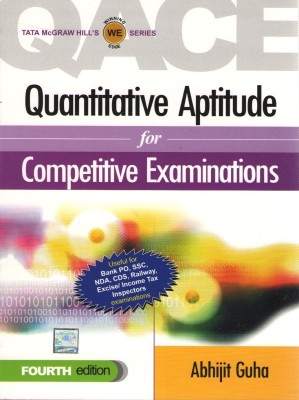
Book For Quantitative Aptitude for Competitive Exams

Book For Quantitative Aptitude for Competitive Exams
(Free Home Delivery*)


₹475  34% Off  |   ₹309
Authored By: Abhijit Guha
Publisher: Tata McGraw - Hill Education (2010)
  

Book Summary:
Quantitative Aptitude For Competitive Examinations is a compilation of questions from commonly tested areas in competitive examinations like Probationary Officers Entrance Exam, LIC exam, Staff Selection Commission, National Defense Academy, etc. The book comprises about 25 chapters, along with original test papers of the above mentioned examinations. It has around 30 solved and unsolved questions in each chapter, in addition to questions in each chapter that appeared in exams, and hints for solving difficult ones. The chapters included in the book are Numbers and Number Systems, LCM and HCF of numbers, Fractions, Approximations, Percentages, Averages, Ratio and Proportion, Partnership, Mixtures and Allegations, Chain Rule, Time, Work and Salary, Pipes and Cisterns, Profit, Loss and Discount, Simple Interest, Compound Interest, Shares, Trains, Boats, Races, Clocks, Geometry (Areas and Volumes), Data Interpretation, Data Sufficiency, Algebra, Linear and Quadratic Equations, and Inequalities, Permutations, Combinations and Probability, and Statistics. It also contains Model Question Papers, and questions with solutions. It was published in 2010.
BOOK DETAILS:

Publisher: Tata McGraw - Hill Education
Publication Year: 2010
ISBN-13: 9780070706354
ISBN-10: 0070706352
Language: English
Edition: 4th
Binding: Paperback
Number of Pages: 714 Pages
Exam: General Studies

Seller: Flikart

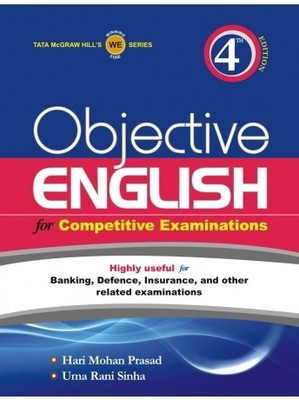
Book For Objective English for Competitive Examinations

Book For Objective English for Competitive Examinations
(Free Home Delivery*)


₹435  17% Off  |   ₹357
Author: Hari Mohan Prasad, Uma Rani Sinha
Publisher: Tata McGraw - Hill Education (2009)


Objective English For Competitive Examinations comprehensively covers the theoretical aspects of the English language, along with practise test papers and previous years’ question papers. Candidates preparing for competitive examinations will find this book very helpful.

Summary Of The Book:
Objective English For Competitive Examinations, published in 2009, is a book designed for candidates who are getting ready to write their competitive examinations. It focuses on different aspects of the English language, in order to train students who wish to perform well in entrance exams in sectors such as insurance, hotel management, banking, railways, defence, amongst others.
Objective English For Competitive Examinations starts with a section which shows how this book should be used. Furthermore, the authors have included a frequency analysis of questions that have been asked in various tests. The weightage of marks has also been incorporated. The first section of this guidebook is titled Theory, and it contains seven parts. Students will come across three comprehension passages, and will learn how to spot errors. Objective English For Competitive Examinations also explains how to complete, improve and reconstruct sentences. Additionally, this section helps in building a candidates’ vocabulary by teaching them synonyms, antonyms, substitutions, and idioms. Analogy is the final portion of Theory. In this latest edition, the authors have revised the chapter on voice, and have made it more comprehensive. Drilling exercising sets are also included at the end of each chapter. The second section of Objective English For Competitive Examinations contains twenty-one practice test papers. The fourth edition has new papers, and each one is accompanied with their answers. The final portion of this guidebook contains previous years’ question papers. This section has been completely revamped. The authors have added suggestions to help students gain confidence, swiftness, and surety in order to help them tackle questions in the final examinations. Fifty test papers have been included in this guide, some of which are the 2007 Symbiosis National Aptitude Test, 2006 NARSEE, 2005 SSC Section Officer (Audit), and 2001 Indian Institute Of Information Technology. The latest edition of Objective English For Competitive Examinations has many changes and additions incorporated into it, keeping in view the changing trends of the exam patterns. The authors have analyzed more than thirty examination papers. This guidebook is ideal for those who wish to enhance their understanding of the English language, and perform well in competitive exams.

About The Authors:
Hari Mohan Prasad has written How to Prepare for GD & Interview, A Handbook Of Spotting Errors for Competitive Examinations, and The Literary Heritage: A New Anthology Of Prose And Short Story. Uma Rani Sinha has penned down The Gita As It Was.

TABLE OF CONTENTS:

SECTION I: THEORY

PART I: COMPREHENDING PASSAGES:
Objective Comprehension - I, Objective Comprehension - II, Objective Comprehension - III

PART II: APPLYING GRAMMAR:

Spotting Errors, Spotting Errors - Variation Pattern - I, Spotting Errors - Variation Pattern - II, Spotting Errors - Variation Pattern - III, Spotting Errors - Variation Pattern - IV, Sentence Improvement, Voice, Prepositions.
PART III: FILL IN THE PARAGRAPH GAPS:
Cloze Test or Numbered Gaps
PART IV: SENTENCE SKILLS:
Sentence Completion, Sentence Fillers
PART V: BUILDING VOCABULARY:
Vocabulary Test - Synonym, Vocabulary Test - Antonym,Vocabulary Test - Special Type - I, Vocabulary Test - Special type - II, Miscellaneous Vocabulary
Idioms and Phrases,Substitution
PART VI: SENTENCE RECONSTRUCTION:
Sentence Reconstruction: Sentence Arrangement, Jumbled Sentences and Paragraph Reconstruction
PART VII: ANALOGY:

SECTION II: PRACTICE TEST PAPERS:

Seller: Flipkart
Book For UPSC Exams: Geography of India

Book For UPSC Exams: Geography of India
(Free Home Delivery*)


₹440
Author: Majid Husain
Publisher: Tata Mcgraw Hill (2013)


Geography Of India is a factual, informative and academic book that covers all the aspects of the geography of the Indian subcontinent.

Summary Of The Book: 
Providing in-depth information on the various concepts and aspects pertaining to Indian geography, Geography Of India is a very helpful guide for students, research scholars, civil services aspirants and academicians.The book commences with a chapter on the basic structure of India. Thereafter, it provides exhaustive information on its physiography, the climate, its energy resources, and drainage. Topics like Spatial Organisation of Agriculture, Regional Development and Planning and Transport, Communications, and Trade are also discusses in detail. With assured brevity and accuracy of the text, Geography Of India provides numerous case studies for environmental degradation, agriculture, biodiversity conservation and transportation in India. Updated and reinforced data on India’s forests, its national parks and biosphere reserves and wetlands is also given. New and revised maps highlighting the hazard zones and parts of the Indian ocean prone to pirate attacks have also been provided. The new maps in the book include India Sex Ratio, West­ern Ghats, and Major Nat­u­ral Haz­ards in India. Geography Of India can be useful for students preparing for the Civil Services exam, as 50 percent of the marks in the geography optional paper is related to Indian Geography.

About Majid Husain:
Dr. Majid Husain is an Indian author and professor of Geography. He has authored books like Human Geography, Indian and World Geography, Systematic Agricultural Geography, 1000 Plus Questions on Indian and World Geography, and Fundamentals of Physical Geography. Born in Roorkee, Dr. Husain has over forty years of teaching experience, and was the erstwhile President of the Indian National Cartographic Association. He has taught at prestigious universities in New Delhi, Srinagar and Shillong, such as Jamia Milia Islamia and the University of Kashmir. With over 43 years of research experience, he won the Delhi Government Award in 1997 for Best Geography Teacher. Dr. Husain was also awarded the Bhugol Bhushan Award by the Deccan Geographical Society India in 2008.

BOOK DETAILS:
Publisher: Tata Mcgraw Hill
Publication Year: 2013 January
ISBN-13: 9781259064036
ISBN-10: 1259064034
Language: English
Edition: 4
Binding: Paperback
Number of Pages: 808 Pages
Exam: UPSC


Seller: Flipkart
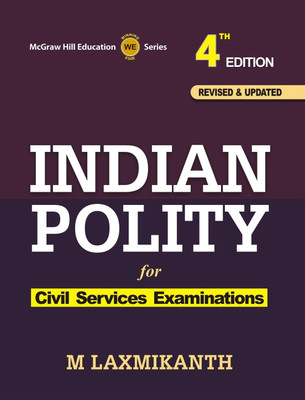
Indian Polity For Civil Services Examination

Indian Polity For Civil Services Examination
(Free Home Delivery*)

₹495  38% Off  |   ₹303
Authored By: M Laxmikanth
Publisher: McGraw Hill Education (2013) 


Published in the year 2013, Indian Polity For Civil Services Examinations is a book that provides the readers with insight into important topics that need to be understood by students to clear the civil services examination.

Summary Of The Book:
Indian Polity For Civil Services Examinations has been designed to meet the requirements of students preparing for civil service examinations. This book covers the entire syllabus, which civil service aspirants need to understand.

This book has been divided into 11 parts, which include Constitutional Framework, Central Government, System of Government, State Government, Constitutional Bodies, Union Territories And Special Areas, Local Government, Non-Constitutional Bodies, Other Constitutional Dimensions, Political Dynamics, and Working of the Constitution.

The first part of the book deals with the historical background of the constitution, and throws light on fundamental rights, fundamental duties, citizenship, and features of the constitution. The second part deals with the parliamentary system, emergency provisions, special provision for certain states, inter-state relations, and the current status of Jammu & Kashmir. The third part provides insight into the central government by explaining the roles of the President, Prime Minister, and Vice-President. In the fourth part, students are provided detailed information on the state government, explaining the role of the Chief Minister, Governor, state council of ministers, subordinate courts, and high court.

In the fifth part, the readers are provided insight into the Panchayati Raj as well as urban local governments. The sixth part deals with union territories, and scheduled, and tribal areas. In the seventh part, the author throws light on the constitutional bodies, which include the finance commission, election commission, advocate general of the state, special officer for linguistic minorities, national commission for SCs, national commission for STs, and union public service commission.

The eighth part of this book throws light on the planning commission, national human rights commission, state human rights commission, lokpal, and lokayuktas, central vigilance commission, and state information commission. In the ninth part, the readers are provided insight into public services, anti-defection law, tribunals, and special provisions for ST’s, Anglo-Indian’s, minorities, and BC’s. In the tenth part, the readers are also provided insight into national integration, foreign policy, pressure groups, political parties, and elections. The eleventh part deals with the national commission’s plan to examine the constitution’s working.

In this third edition, the author also provides 7 appendices at the end of the book. The appendices cover topics such as table of precedence, definitions under the constitution, constitutional amendments at a glance, subjects of union, state, and concurrent lists, articles of the constitution, and ministries/departments of the central government. This edition of Indian Polity For Civil Services also comes with updated UPSC preliminary, and main question papers as well.

About M. Laxmikanth:
M. Laxmikanth is an author, and trainer. Apart from this book, Laxmikanth has written Governance in India for UPSC Civil Services Preliminary Examination, Indian Polity, and Public Administration.Laxmikanth completed his master’s degree from Osmania University in 1989. Following that, he started his own coaching academy, Laxmikanth’s IAS. Laxmikanth has a great deal of experience coaching civil service aspirants.


TABLE OF CONTENTS:
Part I

Constitutional Framework:
Historical Background:The Company Rule (1773–1858), The Crown Rule (1858–1947), Notes and References
Making of the Constitution:  Composition of the Constituent Assembly, Working of the Constituent Assembly, Committees of the Constituent Assembly, Enactment of the Constitution, Enforcement of the Constitution, Criticism of the Constituent Assembly, Notes and References.
Salient Features of the Constitution: Introduction, Salient Features of the Constitution, Notes and References.
Preamble of the Constitution: Text of the Preamble, Ingredients of the Preamble
Key Words in the Preamble, Significance of the Preamble, Preamble as Part of the Constitution, Amendability of the Preamble, Notes and References.
Union and its Territory: Union of States, Parliament’s Power to Reorganise the States, Evolution of States and Union Territories,Notes and References.
Citizenship:  Meaning and Significance, Constitutional Provisions, Citizenship Act, 1955, Single Citizenship, Notes and References.
Fundamental Rights: Features of Fundamental Rights, Definition of State, Laws Inconsistent with Fundamental Rights, Right to Equality, Right to Freedom, Right Against Exploitation, Right to Freedom of Religion, Cultural and Educational Rights
Right to Constitutional Remedies, Writs—Types and Scope, Armed Forces and Fundamental Rights, Martial Law and Fundamental Rights, Effecting Certain Fundamental Rights, Present Position of Right to Property, Exceptions to Fundamental Right, Criticism of Fundamental Rights, Significance of Fundamental Rights, Rights Outside Part III, Notes and References.

Directive Principles of State Policy: Features of the Directive Principles, Classification of the Directive Principles, New Directive Principles, Sanction Behind Directive Principles, Criticism of the Directive Principles, Utility of Directive Principles, Conflict Between Fundamental Rights and Directive Principles, Implementation of Directive Principles, Directives Outside Part IV, Notes and References.
Fundamental Duties: Swaran Singh Committee Recommendations, List of Fundamental Duties, Features of the Fundamental Duties, Criticism of Fundamental Duties, Significance of Fundamental Duties, Verma Committee Observations
Notes and References.
Amendment of the Constitution: Procedure for Amendment, Types of Amendments, Criticism of the Amendment Procedure, Notes and References.
Basic Structure of the Constitution:Emergence of the Basic Structure, Elements of the Basic Structure, Notes and References.

Part II
System of Government: 

Parliamentary System: Features of Parliamentary Government, Features of Presidential Government, Merits of the Parliamentary System, Demerits of the Parliamentary System, Reasons for Adopting Parliamentary System, Distinction between Indian and British Models, Notes and References
Federal System: Federal Features of the Constitution, Unitary Features of the Constitution, Critical Evaluation of the Federal System, Notes and References.
Centre–State Relations: Legislative Relations, Administrative Relations, Financial Relations, Trends in Centre–State Relations, Notes and References.
Inter-State Relations:  Inter-state Water Disputes, Inter-State Councils, Public Acts, Records and Judicial Proceedings,Inter-State Trade and Commerce, Zonal Councils, Notes and References.
Emergency Provisions: National Emergency, President’s Rule, Financial Emergency
Criticism of the Emergency Provisions, Notes and References.

Part III
Central Government:

President: Election of the President, Qualifications, Oath and Conditions, Term, Impeachment and Vacancy, Powers and Functions of the President, Veto Power of the President, Ordinance-making Power of the President, Pardoning Power of the President, Constitutional Position of the President,Notes and References.
Vice-President: Election, Qualifications, Oath or Affirmation, Conditions of Office
Term of Office, Vacancy in Office, Election Disputes, Powers and Functions, Indian and American Vice-Presidents Compared,Emoluments,Notes and References.
Prime Minister: Appointment of the Prime Minister, Oath, Term and Salary, Powers and Functions of the Prime Minister 1, Role Descriptions, Relationship with the President, Chief Ministers who became Prime Ministers, Notes and References
Central Council of Ministers: Constitutional Provisions, Nature of Advice by Ministers, Appointment of Ministers, Responsibility of Ministers, Composition of the Council of Ministers, Council of Ministers Vs Cabinet, Role of Cabinet, Role, Descriptions, Kitchen Cabinet, Notes and References.
Cabinet Committees: Features of Cabinet Committees, List of Cabinet Committees
Functions of Cabinet Committees, Groups of Ministers, Notes and References.
Parliament:  Organisation of Parliament, Composition of the Two Houses, System of Elections to Lok Sabha, Duration of Two Houses, Membership of Parliament
Presiding Officers of Parliament, Leaders in Parliament, Sessions of Parliament
Devices of Parliamentary Proceedings, Legislative Procedure in Parliament, Joint Sitting of Two Houses, Budget in Parliament, Multifunctional Role of Parliament
Ineffectiveness of Parliamentary Control, Position of Rajya Sabha, Parliamentary Privileges, Sovereignty of Parliament, Notes and References.
Parliamentary Committees: Meaning and Classification, Notes and References.
Parliamentary Forums:  Establishment of Forums, Objectives of the Forums
Composition of the Forums, Functions of the Forums, Notes and References.
Supreme Court:  Organisation of Supreme Court, Seat of Supreme Court
Procedure of the Court, Independence of Supreme Court, Jurisdiction and Powers of Supreme Court, Supreme Court Advocates Notes and References".

Part IV
State Government: 

Governor:  Appointment of Governor, Conditions of Governor’s Office, Term of Governor’s Office, Powers and Functions of Governor, Constitutional Position of Governor, Notes and References.
Chief Minister: Appointment of Chief Minister, Oath, Term and Salary, Powers and Functions of Chief Minister, Relationship with the Governor,Notes and References.
State Council of Ministers: Constitutional Provisions, Nature of Advice by Ministers
Appointment of Ministers, Oath and Salary of Ministers, Responsibility of Ministers
Composition of the Council of Ministers, Cabinet, Notes and References.
State Legislature: Organisation of State Legislature, Composition of Two Houses
Duration of Two Houses, Membership of State Legislature,Presiding Officers of State Legislature, Sessions of State Legislature,Legislative Procedure in State Legislature,Position of Legislative Council,Privileges of State Legislature,Notes and References.
High Court: Organisation of High Court, Independence of High Court,Jurisdiction and Powers of High Court,Notes and References.
Subordinate Courts: Constitutional Provisions, Structure and Jurisdiction,Notes and Reference.
Special Status of Jammu & Kashmir: Accession of J&K to India, Present Relationship Between J&K and India,Features of J&K Constitution, J&K Autonomy Resolution Rejected, Group of Interlocutors for J&K, Notes and References.
Special Provisions for Some States: Provisions for Maharashtra and Gujarat
Provisions for Nagaland, Provisions for Assam and Manipur, Provisions for Andhra Pradesh, Provisions for Sikkim, Provisions for Mizoram, Provisions for Arunachal Pradesh and Goa, Provisions for Karnataka, Notes and References.

Part V
Local Government:

Panchayati Raj: Evolution of Panchayati Raj, 73rd Amendment Act of 1992
Compulsory and Voluntary Provisions, Pesa Act of 1996 (Extension Act), Notes and References.
Municipalities:  Evolution of Urban Bodies, 74th Amendment Act of 1992, Types of Urban Governments, Municipal Personnel,Central Council of Local Government
Notes and References.

Part VI
Union Territories and Special Areas:

Union Territories: Creation of Union Territories, Administration of Union Territories
Special Provisions for Delhi, Advisory Committees of Union Territories, Notes and References.
Scheduled and Tribal A reas: Administration of Scheduled Areas,Administration of Tribal Areas,Notes and References.

Part VII
Constitutional Bodies:

Election Commission: Composition,Independence,Powers and Functions,Notes and References

Union Public Service Commission: Composition, Removal, Independence,Functions
Limitations,Role,Notes and References.
State Public Service Commission: Composition, Removal, Independence, Functions
Limitations, Role, Joint State Public Service Commission, Notes and References.
Finance Commission: Composition, Functions, Advisory Role, Impact of Planning Commission, Commissions Appointed, Notes and References.
National Commission for SC s:  Evolution of the Commission, Functions of the Commission, Report of the Commission, Powers of the Commission,Notes and References.
National Commission for ST s: Separate Commission for STs, Functions of the Commission, Other Functions of the Commission, Report of the Commission
Powers of the Commission, Notes and References.
Special Officer for Linguistic Minorities: Constitutional Provisions, Commissioner for Linguistic Minorities, Role, Vision and Mission, Functions and Objectives,Notes and References.
Comptroller and Auditor General of India: Appointment and Term, Independence
Duties and Powers, Role, Cag and Corporations, Appleby’s Criticism, Notes and References.
Attorney General of India: Appointment and Term, Duties and Functions, Rights and Limitations, Solicitor General of India,Notes and References.
Advocate General of the State: Appointment and Term, Duties and FunctionsNotes and References.

Part VIII
Non-Constitutional Bodies:

Planning Commission: Functions, Composition, Internal Organisation, Personnel
Programme Evaluation Organisation,Critical Evaluation, Notes and References.
National Development Council: Composition, Objectives, Functions,Critical Evaluation, Notes and References.
National Human Rights Commission: Establishment of the Human Rights Commission,Composition of the Commission,Functions of the Commission
Working of the Commission,Role of the Commission,Performance of the Commission, Human Rights (Amendment) Act,, Notes and References
State Human Rights Commission:  Composition of the Commission, Functions of the Commission, Working of the Commission, Human Rights Courts
Notes and References.
Central Information Commission: Composition, Tenure and Service Conditions
Powers and Functions, Notes and References.
State Information Commission:  Composition,Tenure and Service Conditions
Powers and Functions,Notes and References.
Central Vigilance Commission: Composition, Organisation, Functions, Jurisdiction
Working,Notes and References.
Central Bureau of Investigation: Establishment of CBI, Motto, Mission and Vision of CBI, Organisation of CBI, Composition of CBI, Functions of CBI, CBI vs. State Police, CBI Academy, Notes and References.
Lokpal and Lokayuktas: Global Scenario, Lokpal, Lokayuktas, Notes and References.

Part IX
Other Constitutional Dimensions:

Co-operative Societies: Constitutional Provisions, Reasons for the 97th Amendment, Notes and References.
Official Language:  Language of the Union, Regional Languages, Language of the Judiciary and Texts of Laws, Special Directives, Notes and References.
Public Services: Classification of Services, Constitutional Provisions. Notes and References.
Tribunals: Administrative Tribunals, Tribunals for Other Matters, Notes and References.
Rights and Liabilities of the Government: Property of the Union and the States
Suits by or Against the Government, Suits Against Public Officials, Notes and References.
Authoritative Text of the Constitution in Hindi Language: Constitutional Provisions
Reasons for the 58th Amendment,Notes and References.
Special Provisions Relating to Certain Classes: Rationale of Special Provisions
Specification of Classes,Components of Special Provisions, Notes and References

Part X
Political Dynamics:

Political Parties: Meaning and Types, Party System in India, Recognition of National and State Parties, Notes and References.
Elections: Electoral System, Election Machinery, Election Process, Notes and References.
Electoral Reforms:Committees Related to Electoral Reforms, Electoral Reforms Before 1996, Electoral Reforms of 1996.Electoral Reforms After 1996, Electoral Reforms Since 2010, Notes and References
Anti-Defection Law:  Provisions of the Act, Evaluation of the Act, 91st Amendment Act (2003),Notes and References.
Pressure Groups: Meaning and Techniques, Pressure Groups in India, Notes and References.
National Integration: Meaning of National Integration, Obstacles to National Integration, National Integration Council, National Foundation for Communal Harmony, Notes and References.
Foreign Policy: Principles of Indian Foreign Policy, Objectives of Indian Foreign Policy
Look East Policy of India, Gujral Doctrine of India, Nuclear Doctrine of India, Notes and References.

Part XI
Working of the Constitution:

National Commission to Review the Working of the Constitution: Terms of Reference of the Commission, Fifty Years of Working of the Constitution, Areas of Concern: Commission’s Perception,Recommendations of the Commission, Notes and References

Seller: Flipkart
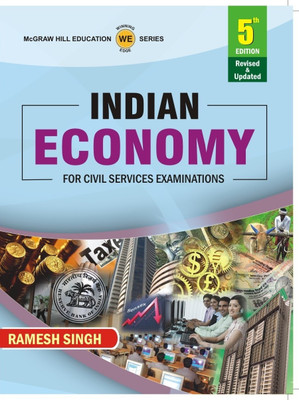
Indian Economy : For Civil Services Examinations

Indian Economy : For Civil Services Examinations
(Free Home Delivery*)


₹425  38% Off  |   ₹260
Authored By: Ramesh Singh
Publisher: McGraw Hill Education (2013)


An updated and revised edition, Indian Economy: For Civil Services Examinations, by Ramesh Singh, is very popular among a section of people interested in reading books about the Indian and Global Economy, and is also useful for civil service students.

Summary Of The Book: 
Indian Economy: For Civil Services Examinations presents a holistic overview of the shift in the global economy and its importance to India and its current situation, with separate chapters on the Indian economy and the evolution of the Indian economy.

Indian Economy: For Civil Services Examinations has an up-to-date and exam-oriented style with new and recent terms added. It has 22 chapters with lots of sub-chapters, including 2 separate chapters on Model Answers To Selected Questions and Economics Concepts And Terminologies. It has updated notes by most recent sources and is very useful for the civil services exam.

The book's widespread description of large and small issues, right from the zenith of centralized planning to the current period of relaxation of government regulations, makes it very useful for the civil services candidates, researchers, academicians and anyone who is interested in understanding the dynamics, growth and present status of the Indian economy.

Some of the chapters in the book are Evolution Of The Indian Economy, Progress, Growth And Development, Economic Planning, Inflation and Business Cycle, and Human Development in India. Chapters on Financial Market, Inflation and Business Cycle have been thoroughly revamped. The book contains numerical updates from India 2013, Economic Survey (2012-13), Union Budget (2013-14) and the Railway Budget (2013-14). Indian Economy: For Civil Services Examinations also has three new chapters, which are Preparing for the Demographic Dividend, Technology-Environment Dilemma, and Sustainability and Climate Change.

The book is written specially for students studying for the Gen­er­al Stud­ies paper of the Civil Services examination. The book can also be used by graduate and undergraduate students of Economics.

Indian Economy: For Civil Services Examinations was authored by Ramesh Singh and published by McGraw Hill Education in June 2013.

About Ramesh Singh:
Ramesh Singh is an alumnus of the Delhi School of Economics and is an educational consultant. Ramesh Singh’s other works include Applied Welding Engineering: Processes, Codes and Standards, Pipeline Integrity Handbook: Risk Management and Evaluation, Bharatiya Arthavyavastha, and Bharat Ka Bhugol (Hindi). He has more than two decades of experience in providing direction for a collection of competitive and professional examinations.

TABLE OF CONTENTS: 
INTODUCTION, PROGRESS, GROWTH AND DEVELOPMENT, EVOLUTION OF THE INDIAN ECONOMY, ECONOMIC PLANNING, PLANNING IN INDIA, ECONOMIC REFORMS, INFLATION AND BUSINESS CYCLE, INDIAN AGRICULTURE, INDIAN INDUSTRY & INFRASTRUCTURE, INDIA AND THE GLOBALECONOMY, INDIAN FINANCIAL MARKET, BANKING IN INDIA, INSURANCE IN INDIA, SECURITY MARKET IN INDIA, EXTERNAL SECTOR OF INDIA, INTERNATIONAL ECONOMIC ORGANISATIONS & INDIA, TAX STRUCTURE IN INDIA, PUBLIC FINANCE IN INDIA
THE TECHNOLOGYENVIRONMENT DILEMMA, SUSTAINABILITY ANDCLIMATE CHANGE: INDIA AND THE WORLD, PREPARING FOR THE DEMOGRAPHIC DIVIDEND
HUMAN DEVELOPMENT IN INDIA, MODEL ANSWERS TO SELECTED QUESTIONS
ECONOMICS CONCEPTS AND TERMINOLOGIES.

Seller: Flipkart

Tata McGraw Hill's GK for Civil Services Prelim Paper II

Tata McGraw Hill's GK for Civil Services Prelim Paper II
(Free Home Delivery*)


₹1250  30% Off  |   ₹875

Author: Tata McGraw Hill's (TMH) 
Publisher: Tata McGraw Hill's (TMH)

BOOK DETAILS
Publisher: TMH
ISBN-13: 9781259027185
ISBN-10: 125902718X
Language: Hindi
Edition: 1st Edition
Binding: Paperback
Exam: CSAT


Seller: flipkart

 
Support : Creating Website | Johny Template | Mas Template
Copyright © 2014. GOfreshers.in - All Rights Reserved
Template Created by Creating Website Published by Mas Template
Proudly powered by Blogger